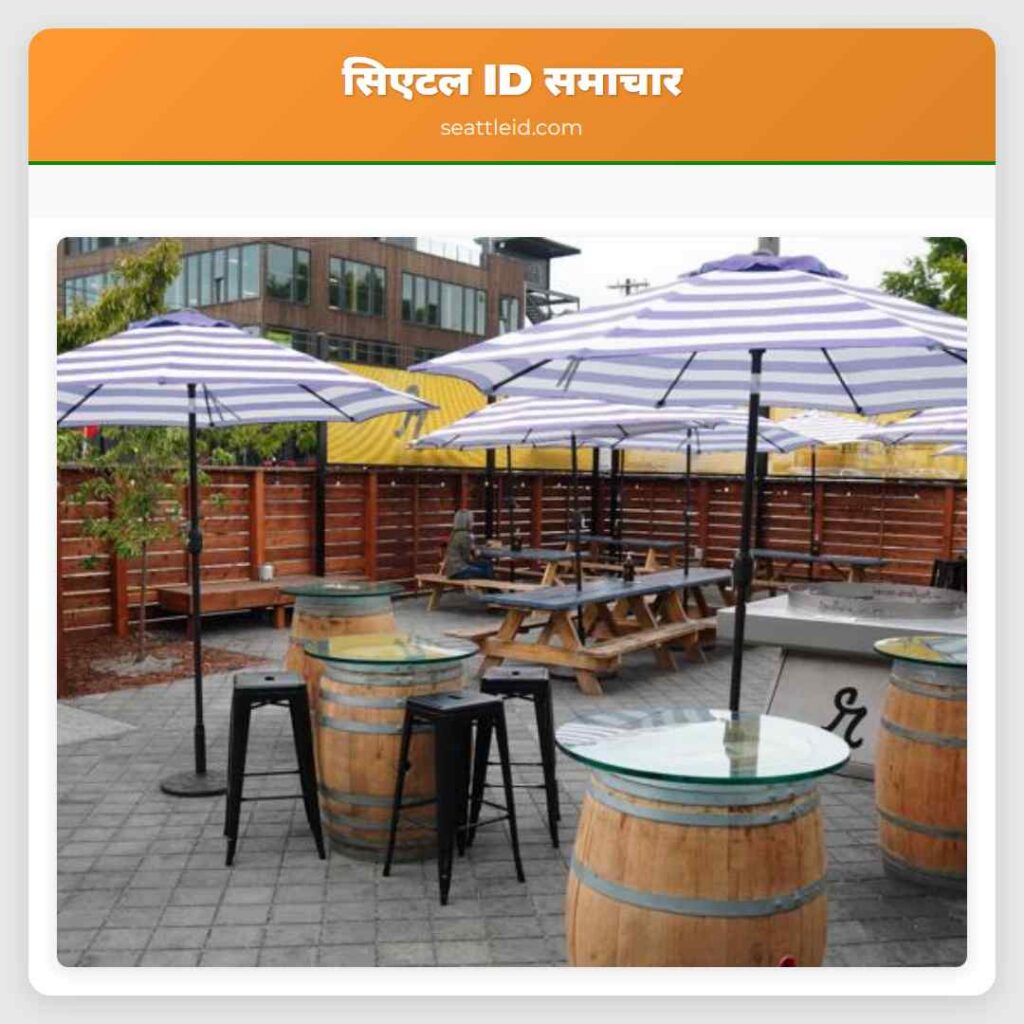
SEATTLE – One of the first breweries to open in what is now Ballard’s brewery district took a chance on an industrial neighborhood that looked very different than it does today.
When Reuben’s Brews opened in 2012, co-founder Adam Robbings said the area east of 15th Avenue Northwest and north of Leary Way had little in the way of a brewery scene. Within a few years, more breweries followed, helping transform a pocket of industrial land into one of the country’s densest concentrations of craft breweries.
More in Business
“What committed us to the idea is that we’re not far away from the rest of the city, and there were new residential units coming to the area,” Robbings told We.
Today, the district is a prominent tourist attraction, which the Port of Seattle advertises as a feature destination for Seattle visitors disembarking from Shilshole Bay Marina.
The city is also banking on the center as an economic hub as it forecasts its growth and development in the years to come.
Seattle’s draft Ballard Interbay Northend Manufacturing and Industrial Center, or BINMIC, subarea plan identifies Ballard’s brewery cluster as an economic asset that is revitalizing portions of the industrial center through reuse of older buildings and by attracting visitors from nearby neighborhoods. It calls for supporting breweries and distilleries through infrastructure investments and marketing efforts.
For brewery owners, however, the conversation increasingly centers on access.
“The one bright spot is tap rooms, and those are all about foot traffic,” Robbings said.
That emphasis comes as the broader craft beer industry faces headwinds. Robbings cited industry data showing craft beer production declined nationally last year, with hundreds of brewery closures across the country.
Transportation was one reason Reuben’s chose Ballard, he said, and remains important to the district’s future, even as the Sound Transit board mulls if it will be able to afford a Link extension past the Seattle Center amid $34.5 billion budget gap.
“As a user, it would be great to be connected,” Robbings said of future light rail service.
But while brewery owners broadly support the long-planned Ballard Link extension, some say the project feels too distant and uncertain to shape near-term decisions.
“We’re definitely in favor of a robust transit system that helps people navigate Seattle more safely and effectively,” Andy Gundel, co-owner and primary operator of Urban Family Brewing, told We. “At this point the light rail seems too far off and uncertain when contemplating our future in Ballard.”
Gundel said a future station would “obviously be a win for Ballard and the brewery district,” and said Urban Family supports efforts by local leaders to deliver the project.
“While we wait, we’d love the city to invest in helping the neighborhood improve bus services, freight access, sidewalks, lighting, sanitation, and people’s sense of safety while living around or visiting the Ballard brewery district,” Gundel said.
Those comments mirror a broader uncertainty hanging over the district.
Seattle’s draft BINMIC plan repeatedly assumes future light rail service through Interbay and Ballard.
The document identifies future stations at Smith Cove, Dravus Street and Northwest Market Street as focal points for employment growth and calls for transit-oriented industrial development around those hubs.
Yet the future of those stations remains uncertain.
The Sound Transit Board has not finalized a long-term financial strategy for the Ballard extension, and several options discussed publicly would delay completion of the line beyond timelines originally presented to voters.
The result is a planning challenge for city officials who are attempting to prepare for a future that may arrive years later than anticipated.
The Office of Planning and Community Development said it is not attempting to predict what the Sound Transit board will ultimately decide.
Instead, planners say the draft subarea plan is designed to accommodate either outcome.
The agency said the plan “already accounts for a possible Ballard station and includes ways for the BINMIC to prepare for and benefit from it.”
“If anything changes, we can update the plan,” OPCD said. “For now, the zoning in that area is set up to bring in more jobs and dense development near the potential station, while still allowing traditional industrial uses if the station doesn’t happen.”
The uncertainty is particularly frustrating for Ballard business advocates who have spent years pushing for rail service to reach the neighborhood.
Mike Stewart, executive director of the Ballard Alliance, said the organization has supported the Ballard Link project since voters approved the ST3 package in 2016. The Alliance advocated for a tunnel alignment beneath the Ship Canal and continues to push for completion of the extension to Market Street.
“Ballard is the only regional center that does not have access to light ra…
ट्विटर पर साझा करें: As Ballard Link remains in limbo brewers fight industry downturn with focus on short-term